Written by
John Spencer
John Spencer is the founder of Compare Expat Plans, where he focuses on helping people compare health plans for life abroad. He emphasizes clear information, neutral analysis, and practical decision support.
You've compared premiums and chosen an international health insurance plan. But the premium is just the starting point. When you actually use healthcare, you'll encounter deductibles, copays, coinsurance, and out-of-pocket maximums—all affecting what you pay.
These cost-sharing mechanisms determine your real healthcare costs. A plan with low premiums but high cost-sharing may cost more overall than a higher-premium plan with lower cost-sharing—depending on how much care you use.
This guide explains each cost-sharing element, how they interact, how they differ in international insurance, and how to choose the structure that fits your healthcare needs and budget.
Understanding Cost-Sharing
| Term | What It Is | Example |
|---|---|---|
| Deductible | Amount you pay before insurance starts | $1,000/year deductible |
| Copay | Fixed amount per service | $25 per doctor visit |
| Coinsurance | Percentage you pay after deductible | 20% of hospital costs |
| Out-of-pocket max | Most you pay per year | $5,000 annual maximum |
| Premium | Monthly cost for coverage | $400/month |
Why Cost-Sharing Exists
Insurers use cost-sharing for two reasons: to reduce premiums (you're paying part of the cost, so premiums can be lower) and to discourage unnecessary care (when you pay something, you think twice about whether you really need that service).
The Trade-Off
Higher cost-sharing means lower premiums but higher costs when you use care. Lower cost-sharing means higher premiums but more predictable costs when you're sick. Neither is inherently better—the right choice depends on your likely healthcare use.
Different Plans, Different Structures
Not all plans use all cost-sharing elements. Some have only deductibles. Some have copays for certain services and coinsurance for others. Some have no cost-sharing after the deductible. Understanding your specific plan's structure matters.
Deductibles: The First Dollar
What Is a Deductible?
A deductible is the amount you pay out of pocket before insurance begins paying. If you have a $1,000 deductible, you pay the first $1,000 of covered expenses each year; insurance pays after that.
Annual vs. Per-Incident
Most international insurance uses annual deductibles—once met, you're covered for the rest of the year. Some policies have per-incident deductibles, applying the deductible separately to each illness or injury. Annual deductibles are generally more consumer-friendly.
What Counts Toward the Deductible
Covered services count toward your deductible. Excluded services don't. Out-of-network care may not count (or counts at reduced rates). Check your policy for what applies.
Deductible Amounts
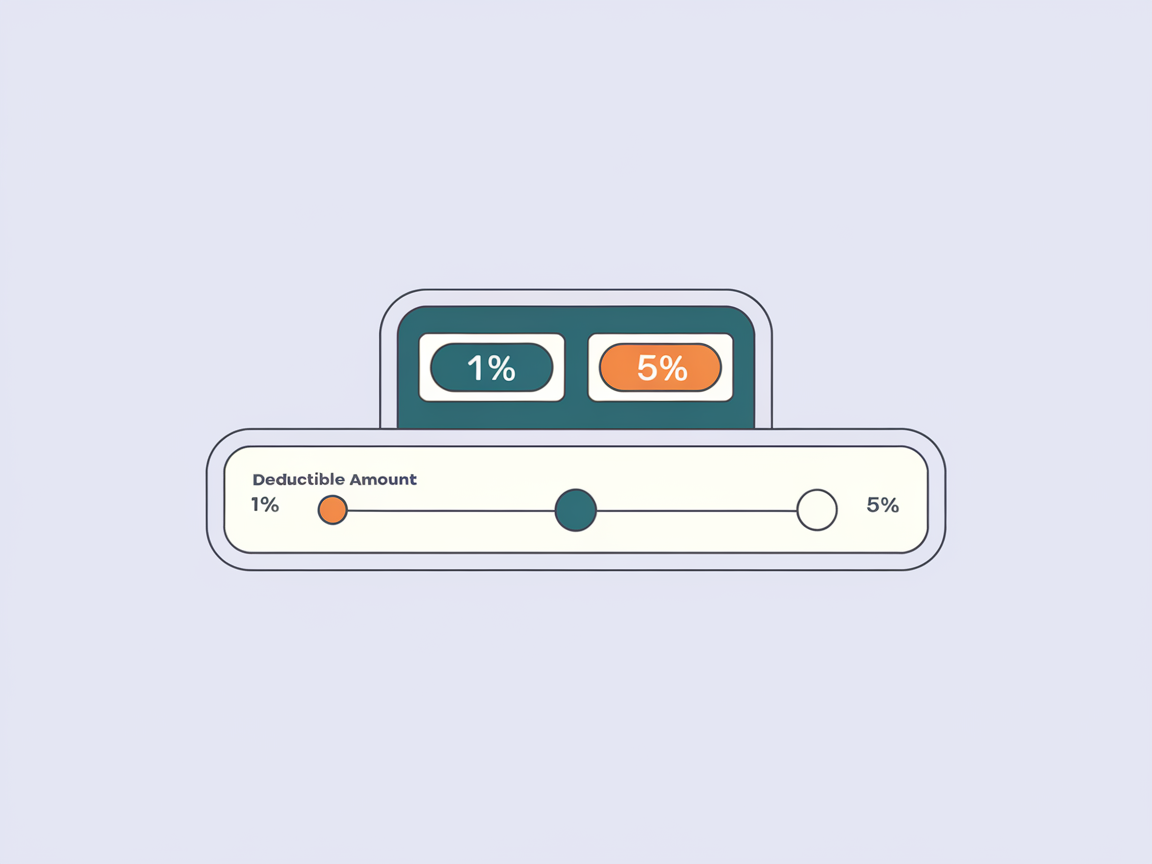
International health insurance deductibles commonly range from $0 to $10,000+. Lower deductibles mean higher premiums. High-deductible plans are much cheaper but leave you paying more for initial care.
Choosing a Deductible
Choose based on your financial capacity and risk tolerance. Can you pay a $5,000 deductible if needed? If not, choose lower. If you rarely use healthcare and can absorb the risk, higher deductibles save on premiums.
Copays: Fixed Per-Service Costs
What Is a Copay?
A copay is a fixed amount you pay for a specific service. $25 for a doctor visit. $50 for a specialist. $10 for a prescription. The amount is set regardless of the actual cost of the service.
Copays and Deductibles
In some plans, copays apply before you meet your deductible—you pay the copay, and the service doesn't count toward your deductible. In others, copays apply after the deductible. Understand how your plan structures this relationship.
Common Copay Structures
Typical copays: primary care visit ($20-50), specialist visit ($40-75), urgent care ($50-100), emergency room ($100-300), prescriptions ($10-50 depending on tier). These vary significantly between plans.
Predictability
Copays provide cost predictability. You know exactly what a doctor visit costs before you go. This makes budgeting for routine care straightforward. No surprises on common services.
Looking for the Right Cost-Sharing Balance?
Compare international health insurance plans with different deductible, copay, and coinsurance structures. Find coverage that fits your budget and healthcare needs.
Compare PlansWe may earn a commission when you apply through our links. This does not affect our recommendations.
Coinsurance: Percentage-Based Sharing
What Is Coinsurance?
Coinsurance is the percentage of costs you pay after meeting your deductible. If your plan has 20% coinsurance, you pay 20% of covered costs and insurance pays 80%. This applies until you reach your out-of-pocket maximum.
Coinsurance vs. Copays
Copays are fixed amounts; coinsurance is percentage-based. For a $200 service: a $25 copay means you pay $25. 20% coinsurance means you pay $40. For a $10,000 hospitalization: 20% coinsurance means you pay $2,000. The difference matters for expensive care.
Common Coinsurance Rates
Typical coinsurance: 80/20 (insurance pays 80%, you pay 20%), 70/30, or 90/10. Some plans have 100% coverage (no coinsurance) after deductible. Higher coinsurance percentages for you mean lower premiums.
When Coinsurance Applies
Coinsurance typically applies after you meet your deductible. Once the deductible is satisfied, coinsurance kicks in for covered services until you reach your out-of-pocket maximum.
Exposure with Coinsurance
Coinsurance creates exposure for expensive care. 20% of a $100,000 hospitalization is $20,000. This is why out-of-pocket maximums matter—they cap your total exposure regardless of how high costs go.
Out-of-Pocket Maximum: Your Safety Net
What Is an Out-of-Pocket Maximum?
The out-of-pocket maximum (OOP max) is the most you'll pay for covered services in a year. Once you hit this amount through deductibles, copays, and coinsurance, insurance pays 100% of covered costs for the rest of the year.
What Counts Toward the Maximum
Typically: deductibles, copays, and coinsurance for covered services count toward your OOP max. Premiums don't count. Out-of-network costs may have a separate (usually higher) maximum.
Typical Maximums
International health insurance OOP maximums typically range from $2,000 to $15,000+ per year. Lower maximums mean more protection but higher premiums. Higher maximums reduce premiums but increase potential exposure.
Why Maximums Matter
The OOP max defines your worst-case scenario. With a $5,000 maximum, you know that's the most you'll pay in a year regardless of what happens. This cap protects you from catastrophic healthcare costs.
Calculating Your Maximum Exposure
Your maximum annual healthcare cost = premiums + out-of-pocket maximum. For a plan with $400/month premiums and $5,000 OOP max, your worst-case year costs $9,800. This helps you budget for healthcare costs.
How Cost-Sharing Works Together
A Typical Scenario
Plan structure: $1,000 deductible, 20% coinsurance, $5,000 OOP max. You have a $15,000 surgery. First, you pay your $1,000 deductible. Then 20% of the remaining $14,000 = $2,800 in coinsurance. Your total: $3,800. Insurance pays: $11,200.
Hitting the Maximum
Same plan, but you have $50,000 in costs. You pay $1,000 deductible + $4,000 coinsurance (20% of $20,000) = $5,000 total—your OOP max. The remaining $45,000? Insurance pays 100%. The maximum protected you.
Low-Use Years
If you only have $500 in healthcare costs with a $1,000 deductible, you pay the full $500 out of pocket. You never met your deductible, so insurance paid nothing beyond covering the premium. This is fine—you had a healthy year.
Planning for Costs
Expected costs = premiums + likely out-of-pocket based on anticipated healthcare use. Maximum costs = premiums + OOP maximum. Your actual costs fall somewhere between, depending on what healthcare you need.
Cost-Sharing in International Insurance
More Variation
International health insurance has more variation in cost-sharing structures than standardized domestic markets. Some plans have no copays, only deductibles and coinsurance. Others have copays for routine care and percentage-based sharing for hospitalizations. Structures vary widely.
Area of Coverage Affects Costs
Some international plans have different cost-sharing for different regions. US coverage often has higher deductibles or coinsurance due to higher healthcare costs. Outside the US, the same plan may have lower cost-sharing.
Currency Considerations
Deductibles and maximums are set in your policy's base currency. If you receive care in a different currency, exchange rates affect how costs translate. A $1,000 deductible means different things depending on local healthcare costs.
No Standard Terminology
International insurers may use different terms. "Excess" often means deductible. "Co-payment" might mean copay or coinsurance depending on the insurer. Read definitions carefully—don't assume terms mean what you're used to.
Choosing Your Cost-Sharing Structure
If You Rarely Use Healthcare
High deductible, higher coinsurance, lower premium. You're betting on not needing much care. Premium savings accumulate; you pay more only if you need significant care. Good for young, healthy individuals.
If You Use Healthcare Regularly
Low deductible, lower coinsurance, higher premium. You'll likely exceed any deductible anyway, so minimizing cost-sharing saves money overall. More predictable costs. Good for those with ongoing healthcare needs.
If You Want Predictability
Look for copay-based plans where you know exactly what each service costs. Low or zero coinsurance after deductible. Lower OOP maximums. Higher premiums but more certainty about what you'll pay.
If You Want Maximum Protection
Low deductible, low coinsurance, low OOP maximum. Yes, premiums are highest. But your exposure is minimized. In a bad health year, you're protected. Worth it for risk-averse individuals or those with significant assets to protect.
Do the Math
Compare total expected costs, not just premiums. A $300/month plan with $2,000 deductible may cost more than a $400/month plan with $500 deductible if you use $3,000 in care. Model scenarios based on your likely healthcare use.
Frequently Asked Questions
Do I pay copays before or after my deductible?
It depends on the plan. Some apply copays immediately (copays don't count toward deductible). Others apply copays only after deductible is met. Still others have copays for some services regardless of deductible. Check your specific policy.
What's the difference between copay and coinsurance?
Copay is a fixed amount ($25 per visit). Coinsurance is a percentage (20% of costs). For expensive care, coinsurance costs much more. Copays provide more predictability; coinsurance provides more premium savings.
Does my premium count toward my out-of-pocket maximum?
No. Premiums are separate from cost-sharing. Only deductibles, copays, and coinsurance count toward your OOP max. Premiums are paid regardless of whether you use healthcare.
What happens after I hit my out-of-pocket maximum?
Insurance pays 100% of covered services for the rest of the policy year. You've "maxed out" your cost-sharing. This resets when your policy year begins again.
Is there coinsurance after I hit my out-of-pocket maximum?
No. Once you hit the OOP max, you pay nothing more for covered services that year. The whole point of the maximum is to cap your costs.
Can I have both copays and coinsurance?
Yes. Many plans use copays for routine services (doctor visits, prescriptions) and coinsurance for bigger expenses (hospitalizations, surgery). The structures can coexist within the same plan.
Understand Your Real Costs
Your premium is just one piece of your healthcare costs. Deductibles, copays, coinsurance, and out-of-pocket maximums determine what you actually pay when you use care. Understanding these elements helps you choose insurance that truly fits your needs and budget.
Don't just compare premiums—compare total potential costs. A cheap premium with high cost-sharing may cost more overall than a higher premium with lower cost-sharing. Do the math for your likely healthcare use.
The right cost-sharing structure matches your health, finances, and risk tolerance. Choose deliberately, not by default.